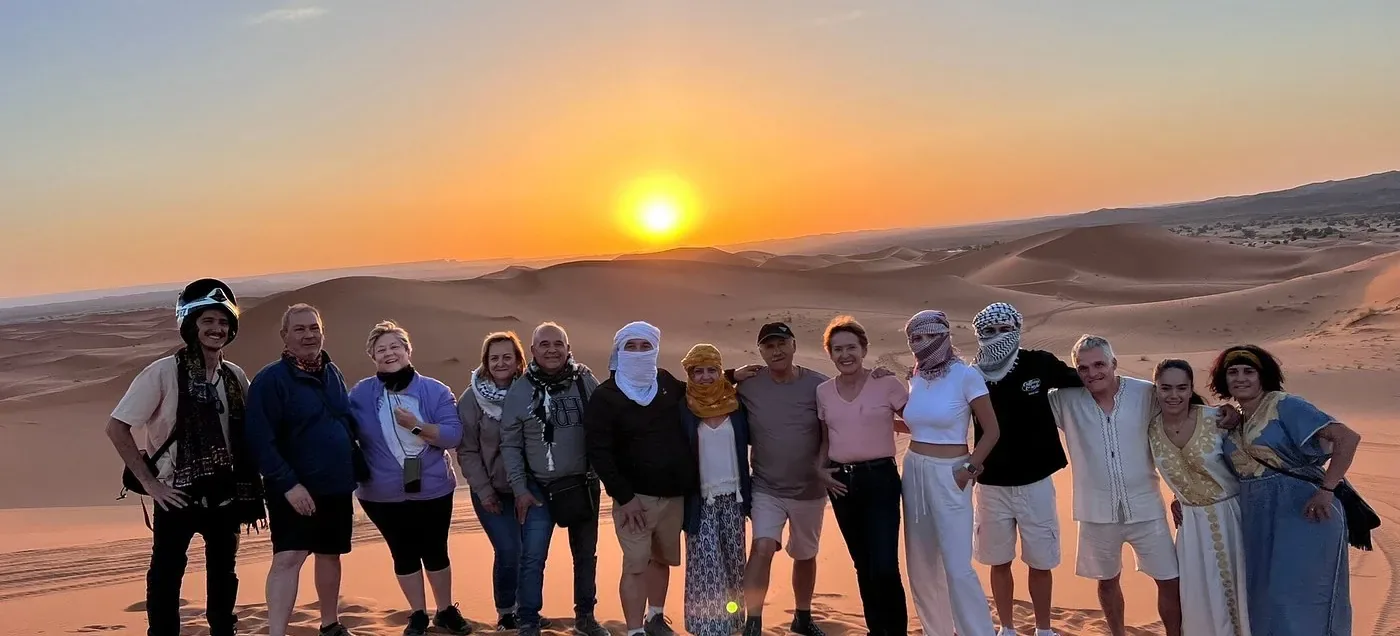
Choose dates for your route, not for Morocco as a whole
There is no single best month for every Morocco trip. Atlantic and Mediterranean coasts, inland cities, the Atlas Mountains and the southeastern desert experience different conditions. A journey from Marrakech or Fes to Merzouga crosses more than one of these settings. Decide which places and activities matter most, then consider how comfortable you are with heat, colder mountain weather and variable conditions before picking dates.
The Moroccan National Tourist Office identifies spring and autumn as favorable times to venture into the Sahara. That recommendation helps with broad planning; it is not a forecast for any specific week. Desert outings can still be affected by wind, rain or heat. Check a current local forecast close to departure and discuss any weather-sensitive activities with the operator.
Spring and autumn: useful Sahara starting points
If the dunes are central to your trip, start by comparing spring and autumn dates. These seasons often make it easier to combine a desert stay with time in cities, though conditions vary by place and year. Morocco's meteorological service describes the country as climatically diverse, with geography and the surrounding seas shaping temperatures and rainfall. It also notes that much of Morocco's rain falls between September and May; that national pattern does not mean rain is expected every day in Merzouga.
A multi-stop tour needs clothing for the whole route. A sunny afternoon in a city tells you little about an early departure in the mountains or an evening at a desert camp. Pack layers you can add and remove, and ask for the current forecast at each overnight stop before finalizing what to carry.
Summer: plan around heat and activity
Summer can be demanding on inland and southern routes. Official climate reporting records frequent high summer temperatures in Morocco's interior, while the coast is influenced by the sea. This is why a coastal stay and a long desert road trip should not be planned as if they have identical weather. No seasonal average can tell you exactly how hot your chosen day will be.
For outdoor desert time, bring sun protection and water, and ask how the daily program adapts if the heat is uncomfortable. Travelers who are especially sensitive to heat may prefer a different travel window or a route with less time exposed outdoors. Confirm any activity timing in the proposal; the season alone does not establish when a camel outing or camp transfer will happen.
Winter: remember the mountain crossing
Winter brings a different packing decision. Morocco's meteorological service reports that mountain areas can have freezing conditions and snow in winter. Marrakech-to-Merzouga and Fes-to-Merzouga journeys pass mountain landscapes, so travelers should consider the conditions along the road as well as at the dunes. Do not assume that a bright desert photograph describes the temperature at every stop.
Carry an insulating layer for cooler hours and ask your accommodation or camp what warmth is provided for your dates. Changes to route timing may be necessary when weather affects a mountain crossing. A forecast and official advisories close to departure are more useful for this decision than a generic 'winter in Morocco' rule.
Use this seasonal decision guide
Compare your seasonal priorities
| Your priority | What to consider | What to confirm |
|---|---|---|
| Sahara dunes | Spring and autumn are the tourist office's broad recommendation. | Current forecast, camp arrangements and outdoor activity conditions. |
| Coastal time | The coast has a different climate from inland and desert destinations. | Conditions at every stop if the trip also goes inland. |
| Summer desert trip | Interior heat can make exposed activities uncomfortable. | Daily pacing, water access and the operator's weather plan. |
| Winter road trip | Mountain conditions can differ sharply from city weather. | Road and weather advisories plus warm bedding and room details. |
Share your dates, start and end cities, and the experiences you hope to include when requesting a trip. We can then point you to an existing itinerary with a suitable number of nights. No guide can guarantee weather, road access or a particular outdoor activity; the confirmed itinerary and current conditions should guide the final plan.